How Poor Yard Drainage Damages Your Foundation: What Every Indianapolis Homeowner Needs to Know
A soggy corner of your yard or water that lingers after rain might seem like a lawn problem — an annoyance, but not an emergency. The reality is that how poor yard drainage damages your foundation is one of the most important things Indianapolis homeowners can understand, because the consequences of ignoring it don’t stay in the yard. Water that has nowhere to go finds somewhere — and that somewhere is often the soil surrounding your foundation, where it quietly builds pressure, saturates structural support, and sets off a chain of damage that is slow to develop and expensive to reverse.
At Homeward Environmental, we assess yard drainage problems across Indianapolis and Central Indiana every day. The drainage issues we see range from minor inconveniences to situations where years of unaddressed water accumulation have already begun affecting foundation walls, basement floors, and soil stability. This guide explains exactly how the connection between yard drainage and foundation health works — and what you can do to protect your home before the damage reaches a point where a drainage contractor isn’t the only professional you need to call.
Your Foundation and Your Yard Share the Same Soil — and the Same Water
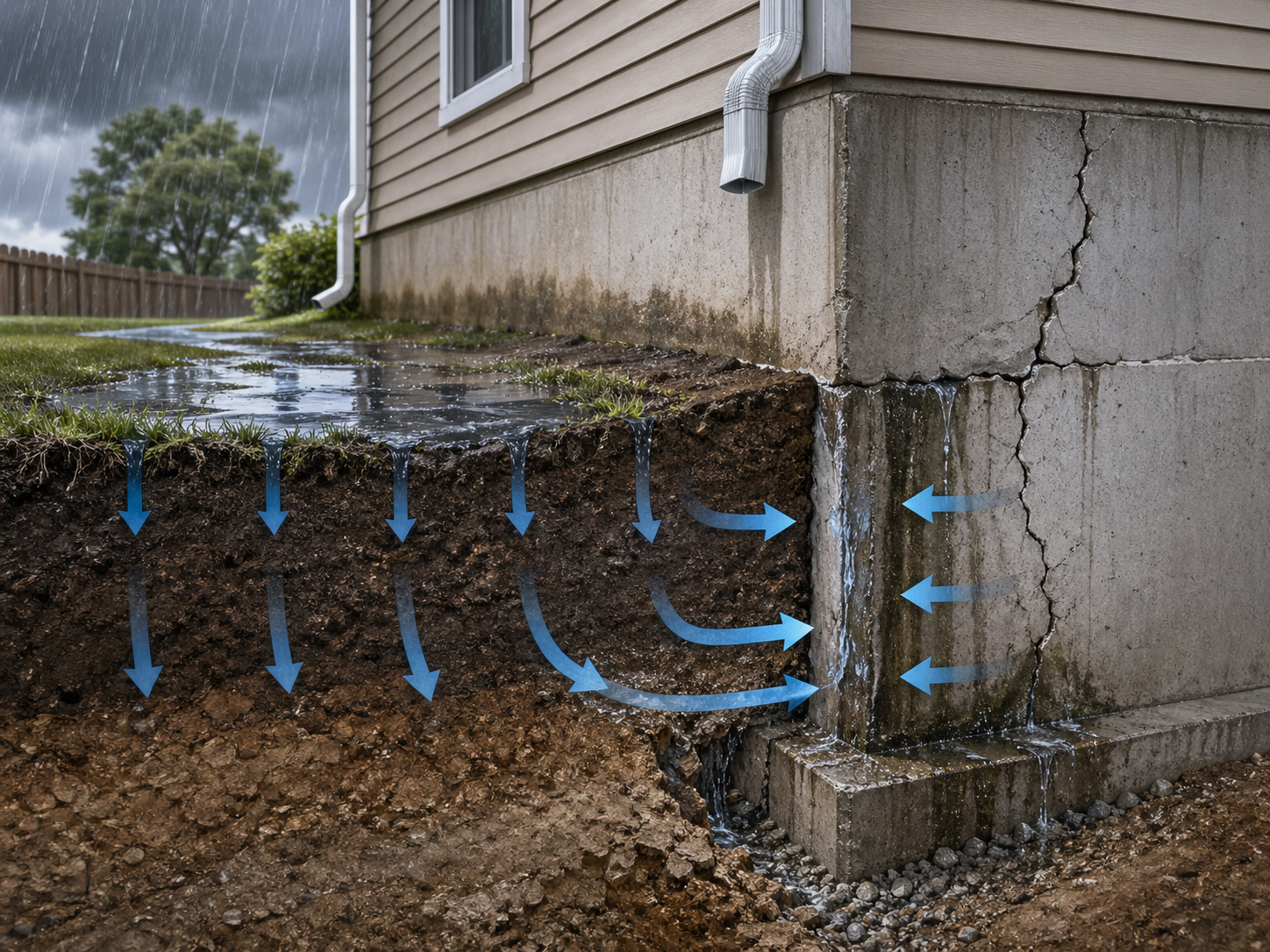
Understanding why yard drainage matters to your foundation starts with understanding what’s happening underground. Your home’s foundation sits in soil. That soil is in direct contact with foundation walls, footings, and in many cases a basement floor or crawl space. When water enters that soil — from rain, surface runoff, groundwater, or roof discharge — it changes the physical properties of the soil in ways that directly stress the foundation.
There are two primary mechanisms through which saturated soil damages foundations:
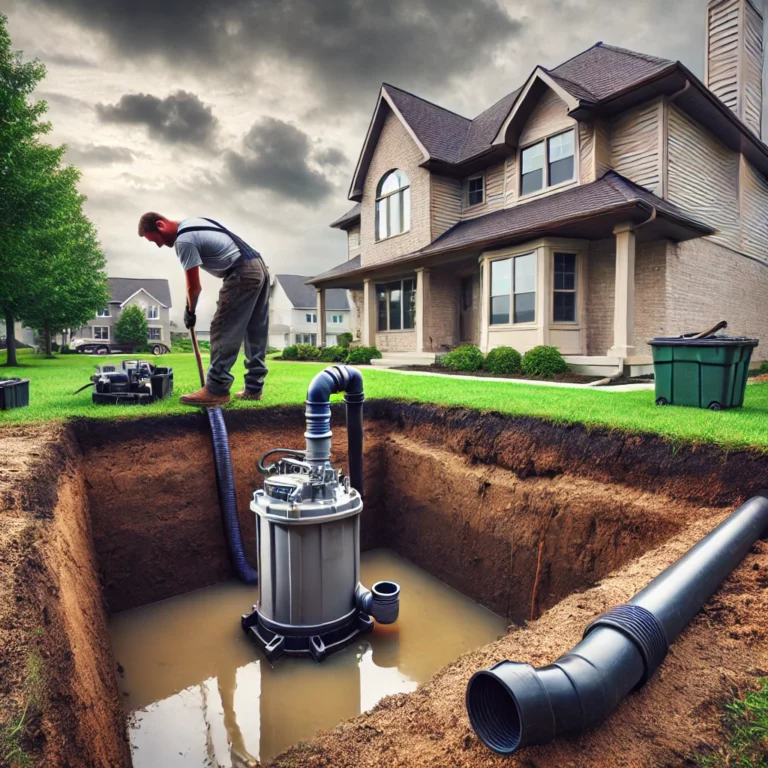
- Hydrostatic pressure: When soil surrounding a foundation becomes saturated with water, the water exerts outward and inward pressure against foundation walls. This pressure — called hydrostatic pressure — increases with the depth and duration of saturation. Over time, sustained hydrostatic pressure causes foundation walls to crack, bow inward, or allow water to seep through even hairline fractures in the concrete or block.
- Soil movement from expansion and contraction: Indianapolis soils are heavily clay-based, and clay soil has a pronounced tendency to expand when wet and contract when dry. Every time your yard floods and dries out, the soil surrounding your foundation swells and shrinks. This repeated movement exerts stress on the foundation from multiple directions — pushing in when wet, pulling away when dry — and over years of cycles, it causes cracking, settlement, and in severe cases, structural movement.
Neither of these processes happens overnight. Both are gradual, and that’s precisely what makes them dangerous — by the time the damage is visible inside your home, the external conditions that caused it have usually been building for years.
The Indianapolis Clay Soil Problem Makes Drainage More Critical Here
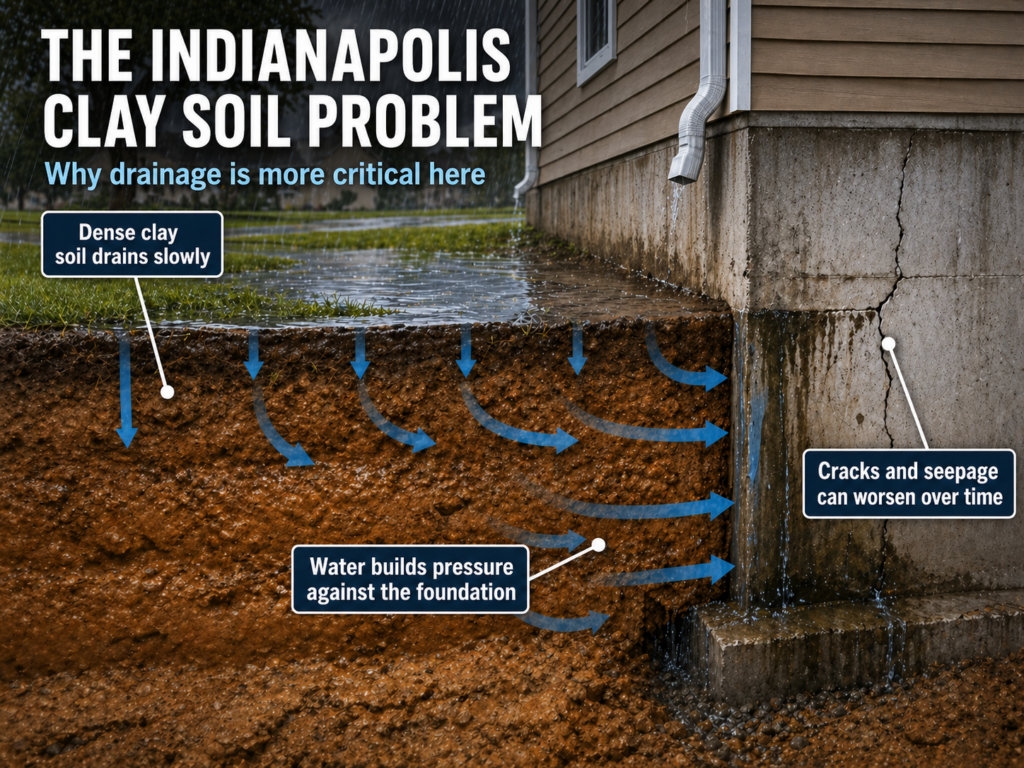
Not all drainage problems are created equal, and Indianapolis homeowners face a particularly significant challenge: the region’s predominant soil type is heavy clay. Clay soil drains slowly — sometimes many times slower than sandy or loamy soils — which means water that falls on or near your property tends to stay near your property rather than percolating away.
When heavy rain falls on clay-dominant soil that is already partially saturated, the result is sustained surface pooling and prolonged soil saturation at depth. That sustained saturation is what elevates hydrostatic pressure against foundation walls to damaging levels. It’s also what makes the expansion-contraction cycle so pronounced — clay swells dramatically when fully saturated and shrinks and cracks when it dries out, creating an almost mechanical stress on everything it surrounds.
This is why yard drainage in Indianapolis isn’t just a comfort issue for homeowners who want a dry lawn. It’s a structural issue that directly affects the longevity and integrity of the most valuable component of your property.
Six Ways Poor Yard Drainage Damages Your Foundation Over Time
The path from drainage problem to foundation damage isn’t a single event — it’s a progression of related effects that compound over time. Understanding each one helps you recognize early warning signs before they escalate.
1. Hydrostatic Pressure and Wall Cracking
Sustained soil saturation around foundation walls builds hydrostatic pressure that the walls were not designed to withstand indefinitely. The result is horizontal or stair-step cracks in basement walls — particularly in block foundation walls where mortar joints are the weakest point. These cracks allow water infiltration, which accelerates further deterioration of the wall material and creates a pathway for moisture, radon, and pests into the living space.
2. Foundation Wall Bowing
In more severe cases, sustained hydrostatic pressure causes foundation walls to bow inward. This is most visible in block or brick foundation walls and represents a structural integrity concern that goes beyond cosmetic cracking. Bowing walls typically require engineered repair — wall anchors, carbon fiber straps, or in serious cases, partial or full wall replacement — at costs that dwarf what a drainage correction would have required.
3. Basement Water Intrusion
Once hydrostatic pressure opens cracks or overcomes the capillary resistance of foundation materials, water enters the basement. Even modest water intrusion creates conditions favorable to mold growth, wood rot in framing members, damage to stored belongings, and deterioration of finished basement spaces. Repeated water intrusion also accelerates the underlying cracking and sealing failures, creating a worsening cycle.
4. Soil Settlement and Foundation Sinking
Prolonged saturation doesn’t just expand soil — it can also wash fine soil particles away from beneath footings through a process called erosion or piping. When the soil that supports your foundation’s footings is removed or destabilized by water movement, the foundation can settle unevenly. Differential settlement — where one part of the foundation sinks more than another — causes diagonal cracking at wall corners, door and window frames that rack out of square, and in severe cases, visible separation between structural components.
5. Freeze-Thaw Amplification
Indiana winters add a second layer of damage risk for foundations surrounded by saturated soil. Water expands approximately 9 percent when it freezes. Soil saturated with water that freezes against foundation walls exerts significant additional pressure during freeze events, and thawing releases that pressure suddenly. This repeated freeze-thaw cycle opens existing cracks wider, loosens mortar in block walls, and accelerates structural deterioration significantly compared to the same drainage problem in a warmer climate.
6. Crawl Space and Slab Moisture Problems
Homes with crawl spaces or slab-on-grade foundations are not immune to drainage-related damage. In crawl spaces, consistently saturated surrounding soil raises the moisture level of the crawl space environment, promoting wood rot in floor joists and subfloor, mold colonization, and pest infestation — all of which compromise structural members over time. In slab foundations, water movement through expansive clay soil beneath the slab causes heaving and cracking that disrupts flooring above and can compromise plumbing embedded in the slab.
Warning Signs That Your Drainage Is Already Affecting Your Foundation
Foundation damage from poor drainage develops gradually, but it sends signals along the way. Catching these signs early — before they become structural emergencies — is the most cost-effective position a homeowner can be in.
- Water stains or efflorescence on basement walls: White, chalky mineral deposits on concrete or block walls indicate water has been moving through the wall and evaporating, leaving minerals behind. This is an early warning that hydrostatic pressure is pushing water through the foundation material.
- Musty odors in the basement or crawl space: A persistent musty smell indicates elevated moisture levels and likely mold or mildew activity — often before visible mold appears.
- Doors and windows sticking or racking out of square: When a foundation moves — even slightly — the door and window frames it supports shift with it. Doors that used to close cleanly but now stick, or windows with visible gaps at corners, are a reliable early indicator of foundation movement.
- Diagonal cracks at door and window corners: Diagonal cracks radiating from the corners of openings in drywall or plaster are a classic sign of differential settlement in the foundation below.
- Horizontal cracks in basement walls: Unlike vertical cracks that may result from concrete curing, horizontal cracks in basement walls — particularly block walls — indicate lateral pressure and require prompt professional evaluation.
- Soil pulling away from the foundation: Visible gaps between the soil and your foundation during dry periods indicate the clay soil is in a contraction phase — and that it expands against your foundation when wet, cycling stress with every rain event.
If you’re observing any of these signs alongside visible yard drainage problems — pooling water, soggy areas, water flowing toward the house — a yard drainage assessment is an essential early step before engaging a foundation repair contractor.
The Drainage Solutions That Protect Indianapolis Foundations
The good news is that most drainage-related foundation risks are entirely preventable with the right drainage systems in place. Homeward Environmental installs the full range of solutions that protect Indianapolis foundations from water damage — often in combination, because most drainage problems have more than one contributing source.
French Drains
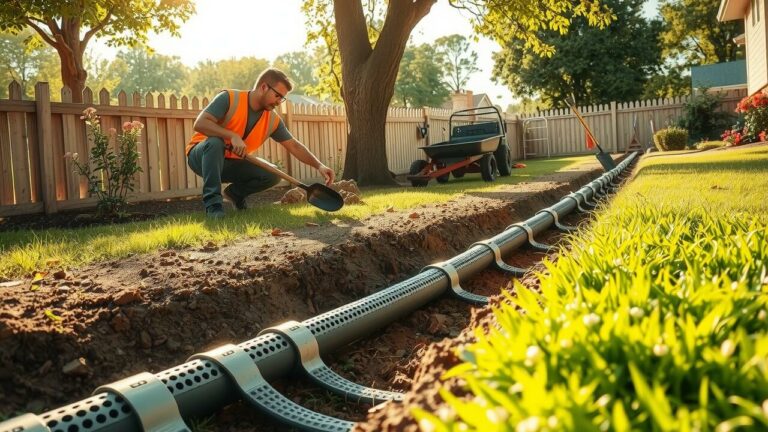
A French drain installed along the foundation perimeter or across the yard intercepts groundwater and surface runoff before it accumulates against foundation walls. By capturing water in a gravel-filled, pipe-lined trench and directing it to a safe discharge point, a French drain dramatically reduces the sustained soil saturation that drives hydrostatic pressure. Homeward Environmental’s French drain systems are designed to last 20 years, with permanent debris boxes, cleanouts every 50 feet, and filter-lined trenches using clean stone for maximum flow capacity.
Buried Downspouts
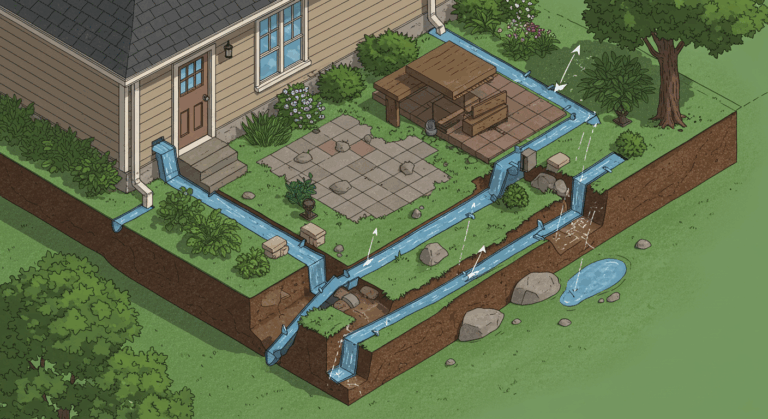
Roof runoff is one of the most concentrated and damaging sources of water near foundations — and most homes discharge it directly at the foundation through standard downspout extensions. Buried downspout systems replace surface extensions with underground smooth PVC pipe that carries roof water completely away from the home before it can saturate foundation soil. Homeward Environmental uses smooth PVC (not corrugated pipe, which traps debris) with cleanouts and debris boxes for long-term reliability.
Yard Drainage and Surface Drains
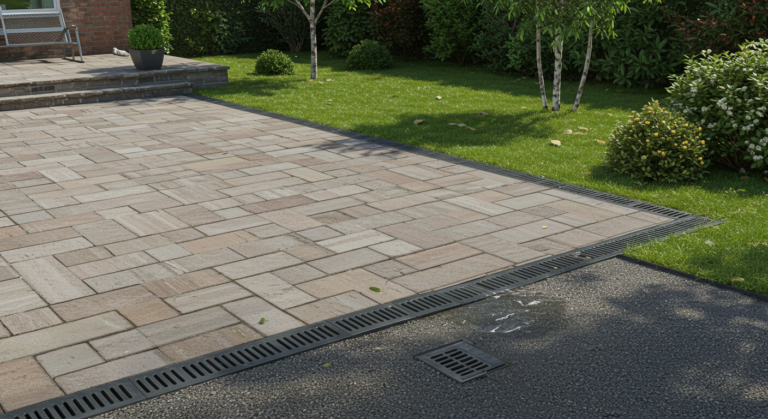
Low points in the yard that collect and hold surface water create sustained saturation zones that allow water to migrate toward the foundation over time. Strategically placed yard drains connected to underground pipe collect that standing water and route it to a discharge point — eliminating the saturation source before it becomes a foundation problem.
Regrading
The ideal yard slopes away from your home’s foundation at a minimum of one inch per foot for the first six feet from the foundation. Many Indianapolis properties have lost this positive slope over years of soil settlement, landscaping changes, or original grading that was never correct. Regrading restores the slope that keeps surface water moving away from the home rather than toward it — sometimes solving the problem without any underground drainage system required.
Frequently Asked Questions: Yard Drainage and Foundation Damage
Can poor yard drainage really damage my foundation?
Yes. Water that consistently pools near your foundation saturates surrounding soil and creates hydrostatic pressure against foundation walls. Combined with Indianapolis’s clay soils — which expand when wet and contract when dry — this repeated stress causes cracking, bowing, water intrusion, and in severe cases, structural settlement. The damage develops gradually, which makes early drainage correction the most cost-effective response.
What are the early warning signs of foundation damage from poor drainage?
Early signs include water stains or white mineral deposits on basement walls, musty odors below grade, doors or windows that stick or rack out of square, diagonal cracks at wall openings, horizontal cracks in basement walls, and soil visibly pulling away from the foundation during dry weather. Any combination of these alongside visible yard drainage problems warrants a professional assessment.
How do I know if my yard drainage is directing water toward my foundation?
Observe your yard during and after a heavy rain. Water pooling within 10 feet of your foundation, flow patterns directed toward the house rather than away, and downspouts discharging at the foundation are all clear indicators. A professional drainage assessment will identify the specific problem areas and recommend targeted solutions for your property.
What drainage solutions protect a home’s foundation?
The most effective solutions include French drains along the foundation perimeter to intercept groundwater, buried downspout extensions to carry roof runoff underground and away from the home, yard drains at low points to collect pooling surface water, and regrading to restore positive slope away from the foundation. Most properties benefit from a combination of these systems rather than a single solution.
Is foundation damage from poor drainage covered by homeowners insurance?
In most cases, no. Standard homeowners insurance typically covers sudden, accidental damage rather than gradual deterioration from ongoing drainage conditions. This makes proactive drainage correction especially important — a drainage system costs a fraction of what foundation repair, waterproofing, or structural remediation typically requires once the damage has progressed.
Don’t Wait for the Foundation to Tell You There’s a Problem
The most expensive version of this story is the one where drainage problems go unaddressed until foundation repair contractors, structural engineers, and waterproofing companies are all involved. The least expensive version starts with a free yard drainage inspection while the problem is still in the yard — before it’s in the walls.
Homeward Environmental offers free on-site yard drainage assessments throughout Indianapolis and Central Indiana. Our team will evaluate your drainage conditions, identify the sources of water accumulation near your home, and recommend a targeted solution designed to protect your foundation for years to come. Call us at (317) 608-5033 or schedule your free inspection online — and get ahead of the problem before it gets ahead of you.